

Let me ask you a question.
How much did you spend on that billboard last quarter? The one that sits in the same spot, day after day, while your competitors drive past it to meet your potential customers?
Now imagine if that billboard could move. If it could park outside your biggest client’s office. If it could generate up to 70,000 impressions every single day, rain or shine, without you paying a dime in recurring fees.
That’s not imagination. That’s what a vehicle wrap does for your business. But here’s the question everyone asks before they commit: How long will it actually last?
The answer determines whether you’re making a smart investment or throwing money at something that’ll peel off in six months. So let’s cut through the marketing fluff and talk real numbers, real durability, and what actually affects how long your mobile billboard stays beautiful.
The Straight Answer: What to Expect
A professionally installed, high-quality vehicle wrap typically lasts between five to seven years. That’s the industry standard, backed by manufacturers like 3M and Avery Dennison who warranty their products accordingly.
But here’s what nobody tells you upfront: that range is massive. The difference between a wrap that looks tired at three years versus one that’s still turning heads at seven years isn’t luck. It’s a combination of material quality, installation expertise, environmental conditions, and how well you maintain it.
Think about it this way: you wouldn’t expect a Ferrari and a budget sedan to age the same way, would you? Same principle applies here.
Breaking Down the Lifespan by Numbers
Let’s get specific about what different scenarios actually deliver:
Premium installations under ideal conditions: 7+ years of pristine appearance. These are garaged vehicles using cast vinyl from top manufacturers, professionally installed, and regularly maintained.
Average daily-use commercial vehicles: 5 years of strong performance. This represents your typical delivery van or service vehicle that sees regular use but receives proper care.
Heavy-use fleet vehicles in harsh climates: 3-4 years before noticeable degradation. We’re talking constant sun exposure, extreme temperatures, and vehicles that rack up serious mileage.
Budget materials or poor installation: 1-2 years before problems emerge. This is the nightmare scenario where corners were cut on quality or expertise.
Notice something? The gap between best and worst isn’t small. It’s the difference between a $3,000 investment that serves you for seven years (about $428 annually) versus one that needs replacement after two years (suddenly $1,500 annually). That’s not a rounding error. That’s the cost of a new hire’s salary.
What Actually Determines Your Wrap’s Lifespan
1. Material Quality: The Foundation That Matters
Not all vinyl is created equal. The industry primarily uses two types of vinyl: cast and calendared.
Cast vinyl is the premium choice. It’s manufactured by pouring liquid vinyl into a casting sheet, which creates a thin, flexible film that conforms beautifully to vehicle curves and maintains dimensional stability. Major manufacturers like 3M’s 1080 and 2080 series, along with Avery Dennison’s Supreme Wrapping Film, use this process. These materials typically carry warranties from five to eight years, and for good reason. They’re engineered to resist fading, cracking, and peeling even under demanding conditions.
Calendared vinyl is the economy option. It’s produced by forcing vinyl through rollers to achieve the desired thickness, which makes it less flexible and more prone to shrinkage over time. It’s cheaper upfront but typically lasts only three to five years. For commercial vehicles where longevity matters, this is rarely the smart choice despite the initial savings.
Here’s the critical insight: premium vinyl includes UV inhibitors and heat stabilizers built into its composition. These aren’t marketing buzzwords. They’re chemical additives that absorb ultraviolet radiation and convert it to heat that dissipates harmlessly, rather than breaking down the vinyl’s polymer structure. In Georgia’s climate, where summer UV indexes regularly hit nine to eleven, this protection isn’t optional. It’s essential.
2. Professional Installation: Where Quality Becomes Reality
You’ve probably heard the saying about the right tools for the job. Vehicle wrap installation isn’t a weekend DIY project, and attempting to save money here is one of the costliest mistakes businesses make.
Professional installation matters because surface preparation is meticulous. The vehicle must be thoroughly cleaned and decontaminated. Any wax, grease, or dirt left on the surface creates weak points where the wrap won’t bond properly. Within weeks or months, you’ll see lifting at edges, bubbling, or premature peeling.
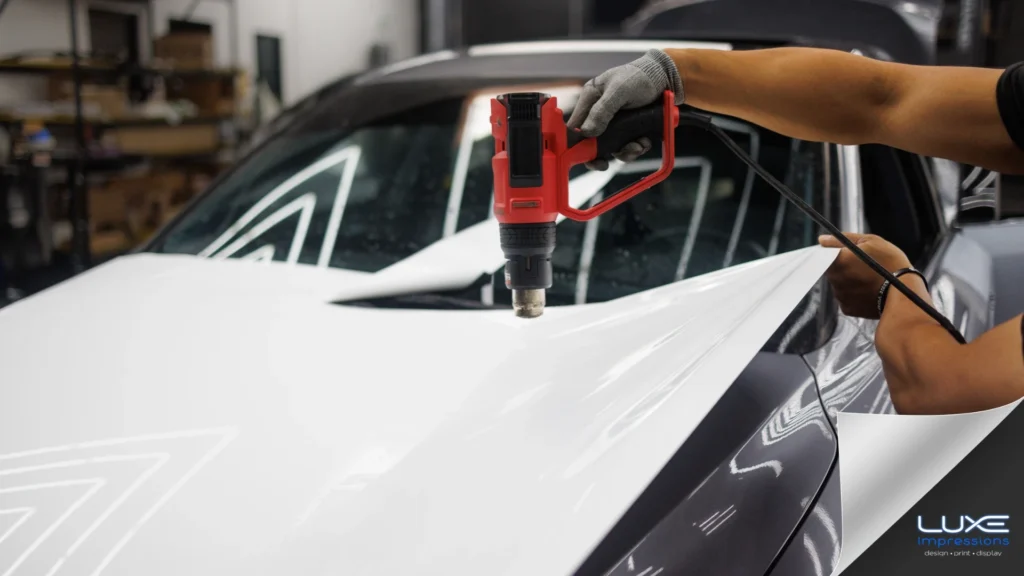
Skilled installers understand how to work with vinyl’s properties. They know exactly how much heat to apply, when to stretch the material (and when not to), and how to ensure proper adhesion around curves, recesses, and edges. Poor installation can reduce a wrap’s lifespan by forty to sixty percent. That’s not an exaggeration. That’s the documented difference between wraps installed by certified professionals versus inexperienced shops.
The math here is straightforward: paying more for expert installation that doubles your wrap’s lifespan costs far less than replacing a failed wrap years earlier.
3. Climate and Environment: Georgia’s Impact on Your Investment
Let’s talk about what Georgia’s climate specifically does to vehicle wraps, because this affects every business in our region.
Georgia delivers approximately 204 sunny days annually, with summer temperatures regularly exceeding 90°F. Atlanta’s concrete jungle creates additional heat through the urban heat island effect. What does this mean for your wrap?
Prolonged UV exposure degrades vinyl through photochemical breakdown. The sun’s rays attack the polymer chains in the vinyl, causing colors to fade and the material to become brittle. High temperatures accelerate this process while also weakening adhesive properties, potentially causing edge lifting or bubbling.
Coastal Georgia businesses face an additional challenge: salt air accelerates wear and tear on vinyl. The salt particles act as mild abrasives while also attracting moisture, which can seep into edges and compromise adhesion.
But here’s what’s interesting: consistent temperatures actually benefit wrap longevity compared to climates with extreme freeze-thaw cycles. Georgia’s relatively stable climate means we avoid one major degradation factor that northern states battle.
The takeaway? Parking in shade whenever possible isn’t just nice. In Georgia, it can add two to three years to your wrap’s lifespan. A garaged vehicle at night, parked in covered areas during the day, will dramatically outlast one sitting in an open parking lot under direct midday sun.
4. Maintenance: The Variable Most Businesses Ignore
Here’s a question: when was the last time you washed your wrapped vehicle?
If you can’t remember, your wrap is aging faster than it should be. Regular maintenance is the single most controllable factor in wrap longevity, yet it’s the one most businesses neglect.
Dirt, grime, road salt, and pollutants don’t just sit on your wrap’s surface. Over time, particularly in heat, they bond with the vinyl. This causes staining, creates abrasive surfaces that accelerate wear, and gives your mobile billboard a tired, unprofessional appearance that actively undermines your brand.
The solution is simple: hand wash your wrapped vehicle every two to four weeks, depending on use. Use pH-neutral automotive soap (never household detergents) and soft microfiber cloths or wash mitts. Avoid automatic car washes with brushes, which can lift edges and scratch the surface. If you must use a pressure washer, maintain at least 12 inches distance and keep pressure below 2,000 PSI.
Think washing is too much trouble? Consider this: a monthly hand wash takes about 30 minutes. Over five years, that’s 30 hours of maintenance that could extend your wrap’s life by two years. That’s an additional $1,500-2,000 in value for the equivalent of four workdays spread across five years. Show me another maintenance task with that return.
The ROI Reality: What Your Wrap Actually Delivers
Let’s discuss what really matters: the money.
Research from the Outdoor Advertising Association of America reveals that vehicle wraps cost less than $1 per thousand impressions. Compare that to $3.56 for traditional billboards or $22 per day for a quarter-page newspaper ad. A single wrapped vehicle generates between 30,000 to 70,000 daily impressions depending on your market density.
Running the numbers with conservative estimates: a $4,000 full wrap investment on a vehicle that lasts five years, driving in moderate traffic, generating 40,000 daily impressions equals approximately 73 million impressions over the wrap’s lifetime. That’s $0.000055 per impression. For context, Facebook advertising runs about $8.60 to $13.75 per thousand impressions.
But impressions alone don’t pay your bills. What matters is conversion. Industry data suggests vehicle wrap advertising achieves a return on investment exceeding 1,000%, with businesses seeing five to ten dollars returned for every dollar spent. That’s not theoretical. That’s measured results from companies that tracked leads attributable to their wrapped vehicles.
Here’s what that looks like in practice: a service business invests $4,000 in a quality wrap. Over five years, that wrap generates four new customers monthly (a conservative estimate from industry studies). If your average customer value is just $500, you’re looking at $120,000 in revenue from that $4,000 investment. Even cutting that estimate in half for pessimism still delivers a 1,400% ROI.
The difference between a wrap that lasts three years versus seven years isn’t just the replacement cost. It’s the lost impressions, the missed leads, the customers who went to competitors because your mobile billboard was out of service. That’s the real cost of choosing cheaper materials or skipping maintenance.
Warning Signs: When Your Wrap Is Telling You Something
Vehicle wraps don’t fail suddenly. They give you warnings, and recognizing them early can mean the difference between a simple repair and complete replacement.
Fading: If colors look dull or washed out compared to when they were new, UV damage is progressing. This typically appears first on horizontal surfaces like hoods and roofs that receive maximum sun exposure.
Edge Lifting: When corners or edges start peeling away from the vehicle surface, moisture can begin working underneath the vinyl. Caught early, these can often be repaired by a professional. Ignored, they spread rapidly.
Bubbling: Small bubbles indicate either installation problems or adhesive failure. If they appear within the first few weeks, contact your installer immediately (it’s usually covered under warranty). If they develop after years, it’s often a sign that the wrap is nearing end of life.
Cracking or Splitting: This is advanced degradation where the vinyl material itself is breaking down. Once you see extensive cracking, replacement is the only solution.
Surface Contamination: If dirt and grime seem permanently bonded to the wrap despite cleaning, the protective surface has degraded and the vinyl is absorbing contaminants.
The smart move? Address problems early. A professional can often repair edge lifting or small damage areas for a fraction of what full replacement costs. Waiting until the wrap looks unmaintainably shabby means you’re losing marketing value every single day while debating replacement.
Making Your Wrap Last: Practical Steps
You’ve made the investment. Now maximize it. Here’s what actually works:
Prioritize shade parking. Even if it means walking an extra minute from your parking spot, the UV protection is worth it. Two minutes daily walking time versus two years additional wrap life? Easy calculation.
Establish a washing schedule. Put it on your calendar. Every other week for commercial vehicles, monthly minimum for lighter use. Make it non-negotiable like oil changes.
Avoid harsh conditions when possible. Don’t park beside construction sites where overspray or debris will bombard your wrap. Stay out of automated car washes with brushes. Use common sense.
Apply protective treatments. Ceramic coatings designed for vinyl provide an additional UV barrier and make cleaning easier. Professional application costs a few hundred dollars and can extend wrap life significantly.
Monitor and address issues immediately. Notice lifting at an edge? Get it repaired this week, not next month. Small problems become expensive problems when ignored.
Use appropriate cleaning products. Never use kitchen cleaners, solvents, or abrasive compounds. Stick with products specifically designed for vinyl wraps or pH-neutral automotive soaps.
Document your wrap’s condition annually. Take photos from multiple angles each year. This helps you notice gradual degradation you might miss when seeing the vehicle daily and helps you plan replacement timing rather than being surprised.
The Decision That’s Actually Easy
Here’s what it comes down to: a quality vehicle wrap from a professional installer, maintained properly, delivers five to seven years of 24/7 marketing that costs less per impression than any other advertising medium available to your business.
The businesses that get the most from their wraps aren’t lucky. They’re strategic. They choose premium materials. They hire experienced installers. They maintain their investment. They park smart. They treat their wrapped vehicles like the mobile billboards they are.
The businesses that complain wraps “don’t last” typically cut corners on quality, skip maintenance, and then wonder why their investment degraded faster than expected.
Which category describes your business?
Every day your service vehicle drives unwrapped through your market, you’re leaving money on the table. Potential customers who would have called you chose competitors instead because they never knew you existed. That invisible cost adds up faster than any wrap investment ever could.
The question isn’t whether vehicle wraps last long enough to justify the investment. The data proves they do, by wide margins. The question is whether you’ll do what successful businesses do: invest in quality, maintain properly, and leverage this tool to its full potential.
Because your competitors? They’re already doing exactly that. And they’re getting the customers who could have been yours.
Ready to transform your fleet into a marketing powerhouse that works around the clock? LUXE Impressions specializes in premium vehicle graphics that deliver results year after year. Our team uses only the highest quality materials from industry leaders like 3M and Avery Dennison, backed by expert installation that maximizes your investment’s lifespan. Let’s discuss how we can make your vehicles impossible to ignore. Contact us today for a consultation that could change how you think about advertising.